An abaya is not a coat, and a hijab is not an accessory
Modest dressing has its own rules, and rules are exactly what styling works with. They are specific, they are learnable, and almost no styling advice written outside the region gets them right.
Vaanity · 6 min read
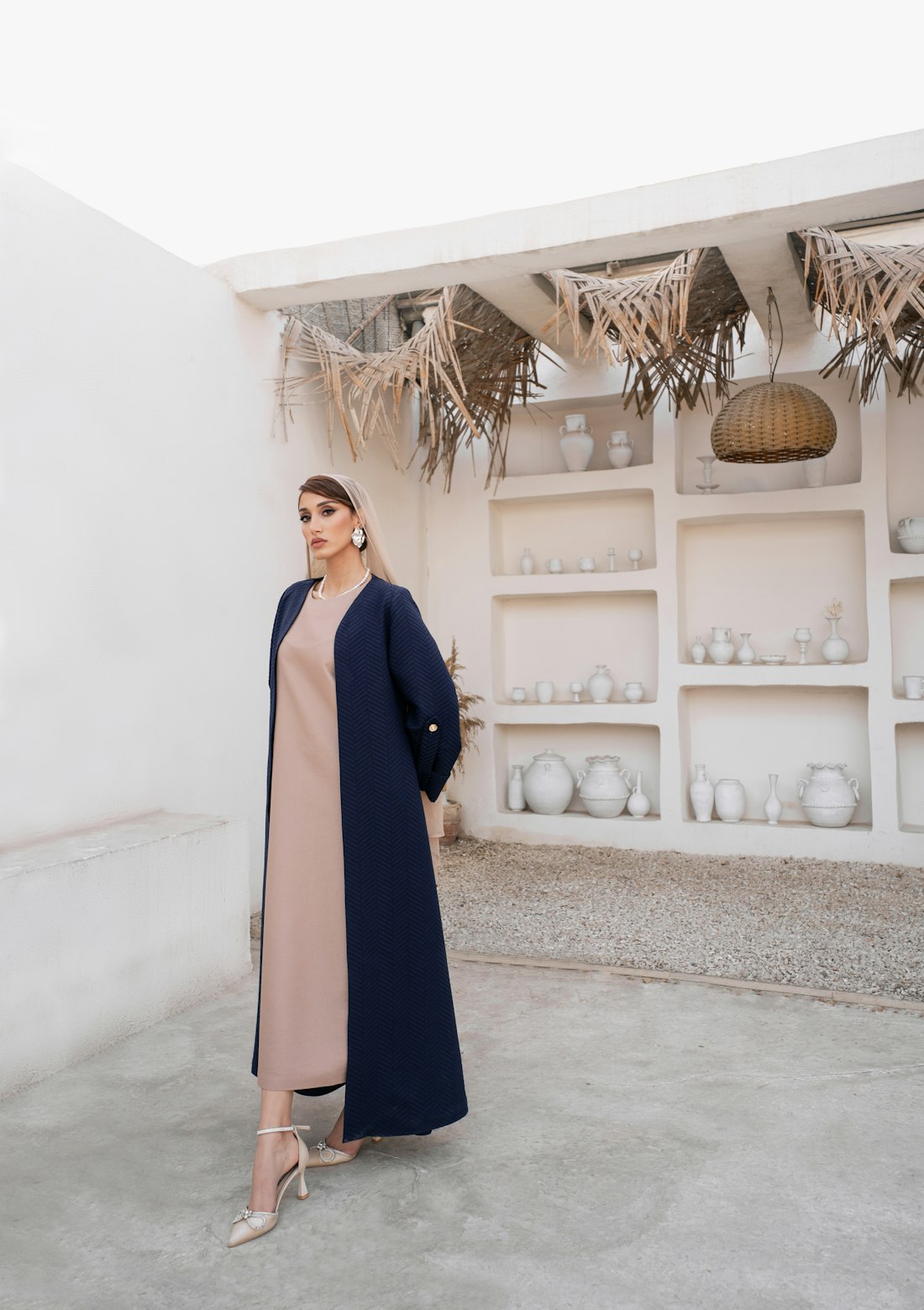
An open abaya is a styling decision about what shows underneath, not a cover-up.
The garment has its own grammar
An abaya is treated in most Western styling writing as outerwear — a long coat with a different name. It is not. Outerwear is designed to be removed; an abaya is very often the whole silhouette, and everything about it has to work as the finished look rather than as a layer over one.
That changes the decisions. Shoulder seam placement matters more than it does on a coat, because there is no jacket underneath doing the structural work. Sleeve volume has to be resolved against the width of the body, not against a shirt. And the fall from the shoulder is the single line the eye follows, so where a fabric breaks decides whether the whole thing reads elegant or heavy.
The fabric nearest your face wins
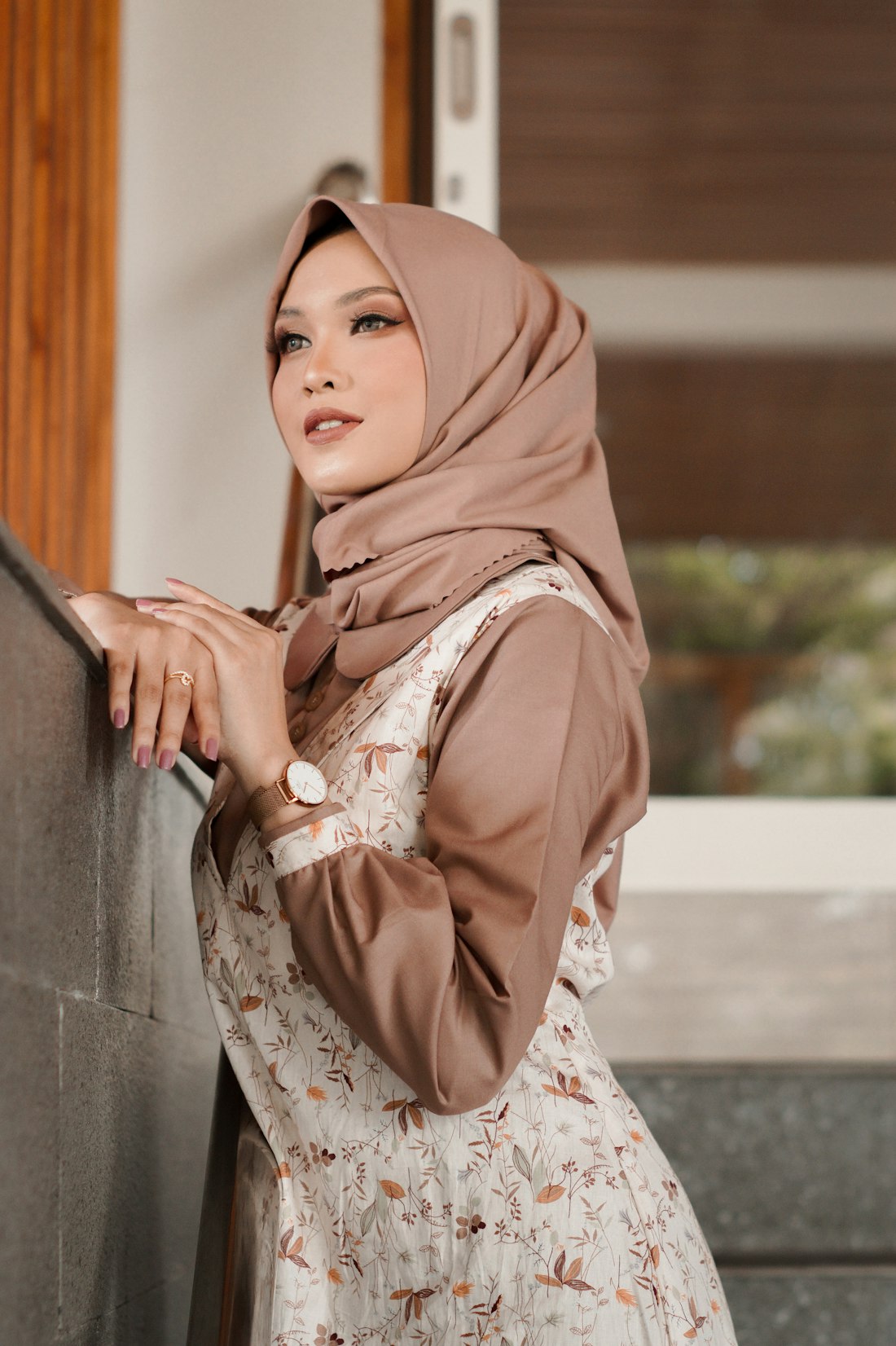
For anyone who covers their hair, the highest-leverage colour decision in the wardrobe is the hijab or shayla, because it is the only fabric in permanent contact with the face. It does what a drape does in a colour analysis, all day, whether or not it was chosen for that.
This is why a colour analysis for a hijab wearer is a different session and produces a different output. The palette gets sorted into what works next to the skin versus what works at distance — a green that is wrong under the chin can be completely correct as a bag, a shoe or the abaya itself.
The only fabric in permanent contact with the face, and therefore the palette decision that matters most.
Coverage is a construction problem, not a size problem
The common mistake is buying up a size to gain coverage. It does not work: a larger garment adds width everywhere, including at the shoulder, and a shoulder that drops past the joint reads as ill-fitting no matter how modest the result.
Coverage is achieved by cut and by layering — a higher neckline, a longer sleeve set correctly, an underdress chosen for its behaviour rather than its colour. A tailor can add length and can add a panel. What a tailor cannot do is fix a shoulder that was too big when it was bought.
Heat is a styling constraint, not a footnote
Nine months of the year, a full-length garment in Dubai has to survive the walk from a car park in forty-plus degrees and then four hours of aggressive air conditioning. Fabrics that behave beautifully in a boutique behave differently at both ends of that.
Weight, weave and lining decide it. Unlined crepe and fine wool blends outperform anything with a heavy polyester lining, and a fabric that creases in the seat of the car is not a fabric for an event you drive to. It is the kind of thing a stylist who works this city knows, and one who does not, cannot.
The occasion register is narrower and more precise
Eid, iftar, majlis, nikah, walima and National Day are not interchangeable, and the difference is often not formality but restraint. A nikah is frequently the most restrained garment of the whole wedding week and the walima the least, which is the opposite of how a Western wedding is graded.
Getting this right is not about knowing more rules. It is about someone reading your invitation, your family, and the specific gathering — and telling you where on that scale the evening actually sits.